

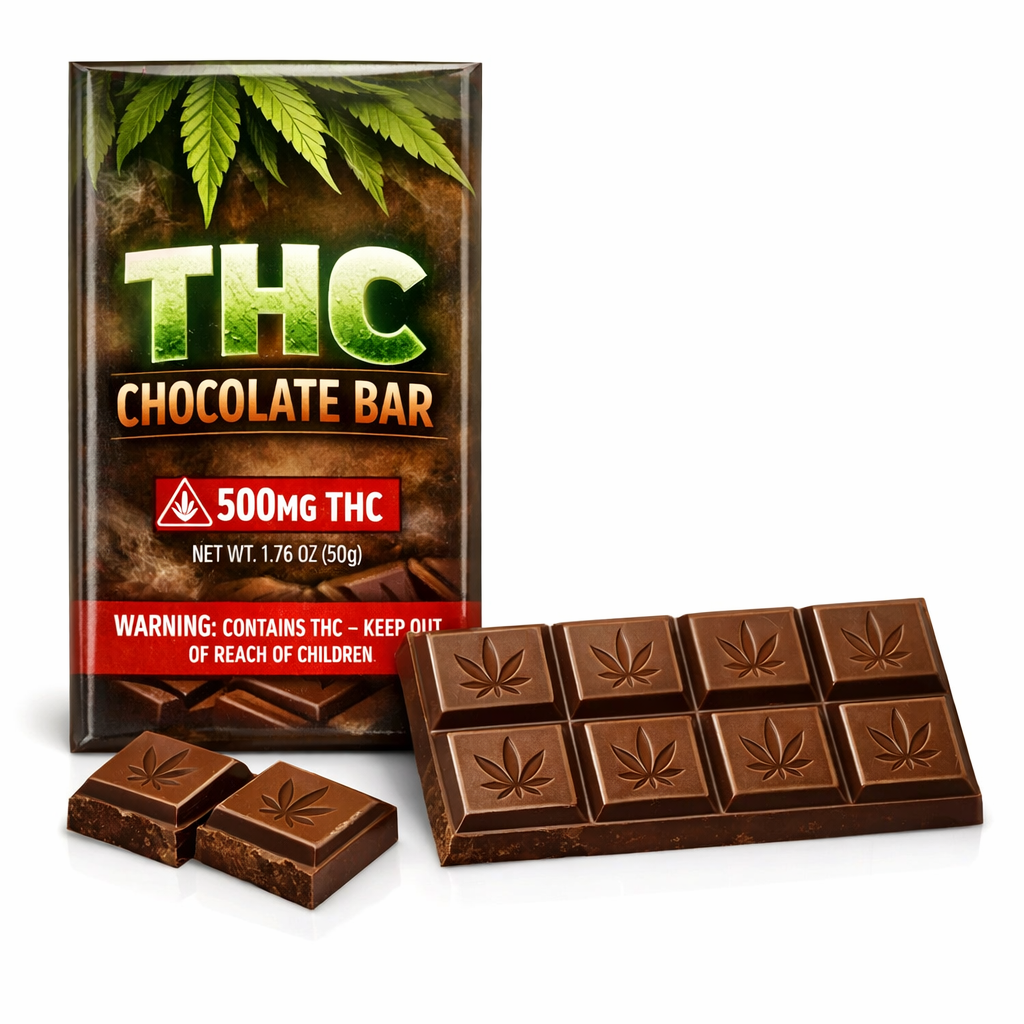

Premium Belgian chocolate with 500mg THC distillate. 10 squares of 50mg each.
Product Name: THC Chocolate Bar (500mg Formulation) Synonyms: Cannabis-infused chocolate; Macrodose edible; Δ⁹-THC lipid matrix formulation
General Description: A “500mg THC Chocolate Bar” is a finished, ingestible product (edible) consisting of a lipid-based chocolate matrix infused with cannabis extract. The active pharmaceutical ingredient (API) is primarily Δ⁹-tetrahydrocannabinol (Δ⁹-THC), though depending on the source material (e.g., distillate, isolate, or full-spectrum cannabutter/rosin), it may also contain other minor cannabinoids (such as CBD, CBG, or CBN) and terpenes.
In analytical and forensic toxicology, high-dose edibles are frequently subjected to laboratory testing. Forensic chemists analyze these products to verify the stated potency, test for active ingredient homogeneity (ensuring the THC is evenly distributed across the chocolate squares rather than concentrated in “hot spots”), and screen for illicit adulterants (such as synthetic cannabinoids, e.g., JWH-018 or MDMB-4en-PINACA, which are sometimes deceptively used in counterfeit grey-market edibles).
Technical Information (Active Ingredient: Δ⁹-THC): THC Chocolate Bar 500mg
- CAS Number (Δ⁹-THC): 1972-08-3
- Molecular Formula (Δ⁹-THC): C<sub>21</sub>H<sub>30</sub>O<sub>2</sub>
- Formula Weight: 314.46 g/mol
- Product Formulation: A solid lipid emulsion. The lipophilic (fat-soluble) nature of THC allows it to bind readily with the cocoa butter and fats present in chocolate.
- Dosage Context: A stated payload of 500mg represents the total THC content of the entire bar. In clinical and legal recreational contexts, a standard single oral dose of THC is widely considered to be 5 to 10 mg. Therefore, a 500mg bar contains 50 to 100 standard adult doses.
Biological Action & Pharmacokinetics: The pharmacological profile of ingested THC differs radically from inhaled THC. Upon ingestion, the chocolate matrix is broken down in the gastrointestinal tract, and the THC undergoes extensive first-pass metabolism in the liver. Hepatic enzymes (specifically cytochrome P450) metabolize Δ⁹-THC into 11-hydroxy-THC (11-OH-THC).
11-OH-THC is a highly potent active metabolite that crosses the blood-brain barrier more rapidly and efficiently than Δ⁹-THC itself, eliciting much stronger, heavily sedating, and more intensely psychoactive effects. Oral administration is characterized by a significantly delayed onset of action (typically 1 to 3 hours) and a heavily prolonged duration of effect (lasting 6 to 12 hours, or longer at extreme doses).
Regulatory and Safety Information:
- Intended Use (Analytical Context): Analytical testing for state-mandated compliance, potency verification, homogeneity profiling, and toxicological screening.
- Warning: A 500mg THC dose is considered an extreme “macrodose” and poses a severe risk of acute cannabis toxicity if consumed in its entirety by an individual without immense physiological tolerance. Acute oral THC overdose (often colloquially called “greening out”) does not typically cause fatal respiratory depression, but it frequently results in severe medical emergencies, including profound tachycardia, orthostatic hypotension (leading to syncope/fainting), cyclic vomiting (cannabis hyperemesis), extreme paranoia, debilitating panic attacks, and acute temporary psychosis. Furthermore, because these products visually mimic standard confectioneries, they pose a critical risk of accidental pediatric poisoning.
Related products
Edibles