
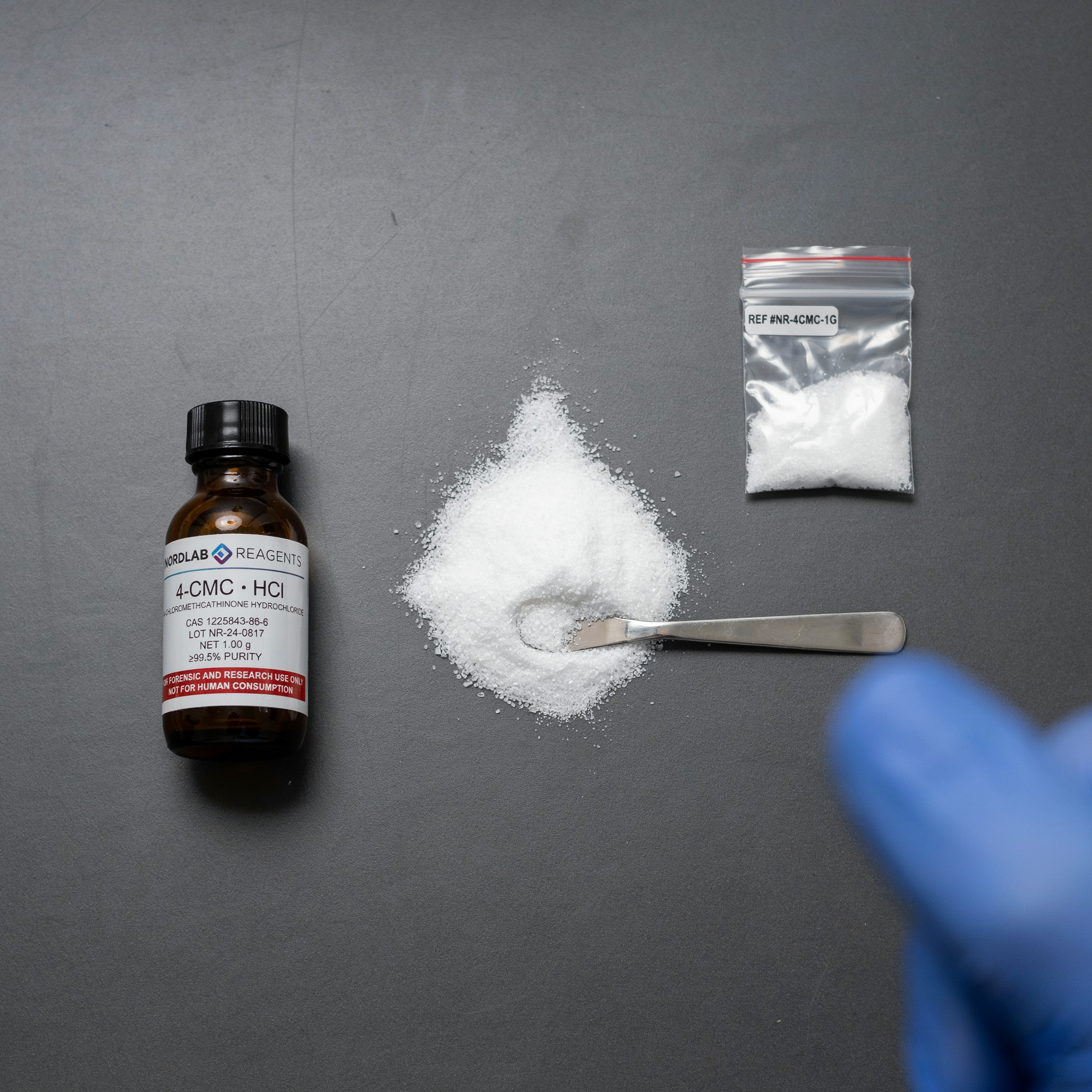

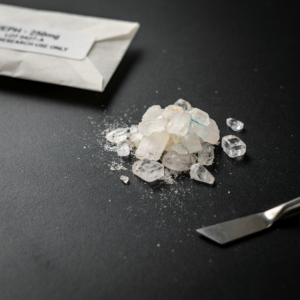
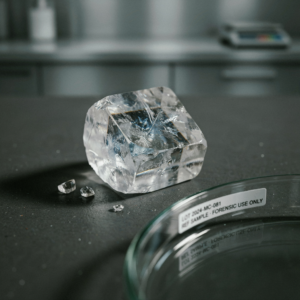
4-Chloromethcathinone (4-CMC) HCl powder form. Research chemical.
**Technical Data Sheet: 4-CMC HCl (4-Chloromethcathinone Hydrochloride)**
**Product Overview**
4-Chloromethcathinone (also known as 4-CMC and Clephedrone) is a synthetic stimulant of the cathinone class. It is the 4-chloro derivative of methcathinone. As a hydrochloride salt (HCl), it typically presents as a stable, crystalline powder. This compound is primarily utilized in forensic and analytical chemistry for identification and research purposes.
**Chemical Identification**
* **Formal Name:** 1-(4-chlorophenyl)-2-(methylamino)propan-1-one, monohydrochloride
* **Chemical Formula:** C10H12ClNO • HCl
* **Molecular Weight:** 234.12 g/mol
* **CAS Number:** 1225843-86-6
* **Purity:** ≥98% (typical for analytical standards)
**Physical and Chemical Properties**
* **Appearance:** White to off-white crystalline powder.
* **Solubility:** Highly soluble in water and polar organic solvents such as ethanol and DMSO.
* **Stability:** Stable at room temperature when stored in a dry, dark environment.
* **Boiling Point:** Not determined (decomposes upon heating).
**Pharmacological Context**
4-CMC acts as a releasing agent for serotonin and dopamine, with a significantly higher potency for the serotonin transporter (SERT) compared to the dopamine transporter (DAT). Due to its chemical structure, it is categorized as a substituted cathinone, sharing structural similarities with 4-MMC (Mephedrone) and 4-FMC (Flephedrone).
**Research Applications**
In laboratory settings, 4-CMC HCl is used for:
1. **Mass Spectrometry (GC-MS/LC-MS):** Serving as a reference standard for the identification of unknown substances in forensic toxicology.
2. **In Vitro Studies:** Investigating the affinity and efficacy of substituted cathinones at monoamine transporters.
3. **Metabolic Profiling:** Studying the metabolic pathways and degradation products of synthetic stimulants.
**Storage and Handling**
* **Storage:** Store at -20°
Related products
Sale!

Stimulants
Original price was: $90.00.$80.00Current price is: $80.00.
Sale!
Stimulants
Original price was: $85.00.$77.00Current price is: $77.00.
Sale!
Stimulants
Original price was: $100.00.$99.00Current price is: $99.00.
Stimulants
$35.00
Sale!
Stimulants
Original price was: $85.00.$75.00Current price is: $75.00.
Sale!
Stimulants
Original price was: $80.00.$75.00Current price is: $75.00.
Stimulants
$65.00
Sale!
Stimulants
Original price was: $90.00.$85.00Current price is: $85.00.