

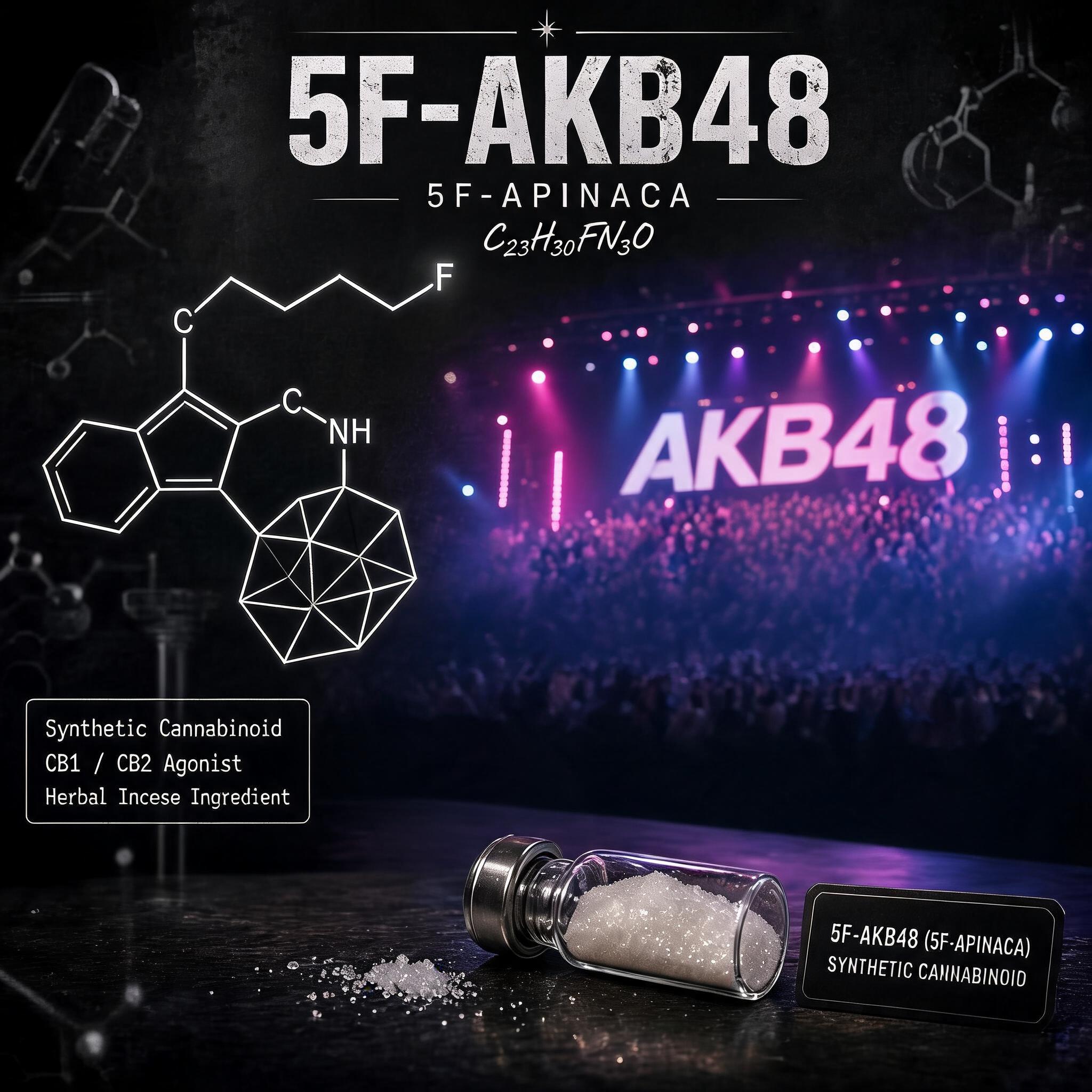

Product Name: 5F-AKB48 (5F-APINACA) Synonyms: 5F-APINACA; AKB48 N-(5-fluoropentyl) analog; N-(adamantan-1-yl)-1-(5-fluoropentyl)-1H-indazole-3-carboxamide
General Description: 5F-AKB48 is formally described as N-(adamantan-1-yl)-1-(5-fluoropentyl)-1H-indazole-3-carboxamide. It is a synthetic, highly psychoactive molecule belonging to the indazole-3-carboxamide class of synthetic cannabinoids (SCs). Structurally, it is the terminal 5-fluoro analogue of the designer drug AKB48 (APINACA). The addition of a terminal fluorine atom to the pentyl chain is a common structural modification in designer cannabinoids designed to enhance binding affinity and circumvent early generic legislation targeting non-halogenated alkyl chains. It emerged heavily on the illicit market in the early-to-mid 2010s as a novel psychoactive substance (NPS).
In analytical, clinical, and forensic toxicology, 5F-AKB48 is utilized as a fundamental reference standard. It is essential for the calibration of analytical instrumentation (such as LC-MS/MS, GC-MS, and NMR) and the development of screening methodologies to identify and quantify the substance in seized “herbal incense” blends (colloquially known as “Spice” or “K2”), adulterated materials, or biological matrices (e.g., whole blood, plasma, urine).
Technical Information:
- CAS Number: 1400742-13-3
- Molecular Formula: C<sub>23</sub>H<sub>30</sub>FN<sub>3</sub>O
- Formula Weight: 383.50 g/mol
- SMILES: O=C(NC12CC3CC(C1)CC(C3)C2)C4=NN(CCCCCF)C5=CC=CC=C45
- InChI Key: FDPYVCHBZWZZOW-UHFFFAOYSA-N
- Formulation: Typically supplied as a neat white-to-off-white crystalline solid or as a certified reference material solution (e.g., 1 mg/mL or 100 µg/mL in methanol or acetonitrile).
Biological Action: Like its parent compound AKB48, 5F-AKB48 acts as a highly potent, non-selective full agonist at both the central cannabinoid type 1 (CB<sub>1</sub>) and peripheral cannabinoid type 2 (CB<sub>2</sub>) receptors. As a full agonist, it heavily overstimulates the endocannabinoid system without the partial-agonist “ceiling effect” associated with Δ<sup>9</sup>-THC (the primary psychoactive component of natural cannabis). This profound hyperactivation mediates intense, unpredictable, and potentially dangerous psychoactive effects. Acute intoxication is strongly associated with severe synthetic cannabinoid toxidromes, including pronounced tachycardia, hypertension, acute synthetic cannabinoid-induced psychosis, severe agitation, seizures, and potentially fatal cardiovascular or renal emergencies.
Regulatory and Safety Information:
- Intended Use: This product is intended strictly for use as an analytical reference standard for forensic, toxicological, and academic research purposes.
| Weight | 0.01 kg |
|---|
Be the first to review “5F-AKB48”
Related products
Cannabinoids

Cannabinoids
Cannabinoids
Cannabinoids
Cannabinoids

Cannabinoids
Cannabinoids

Cannabinoids
Reviews
There are no reviews yet.