


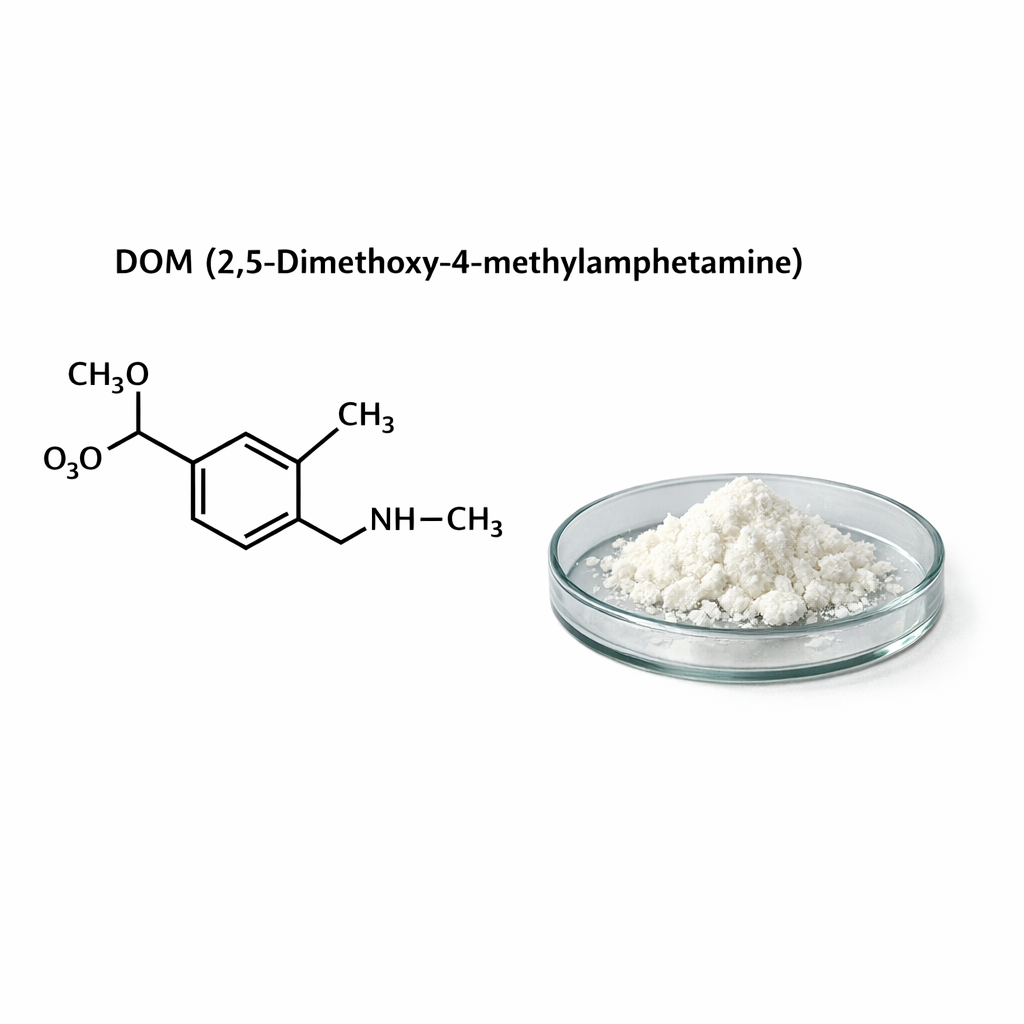
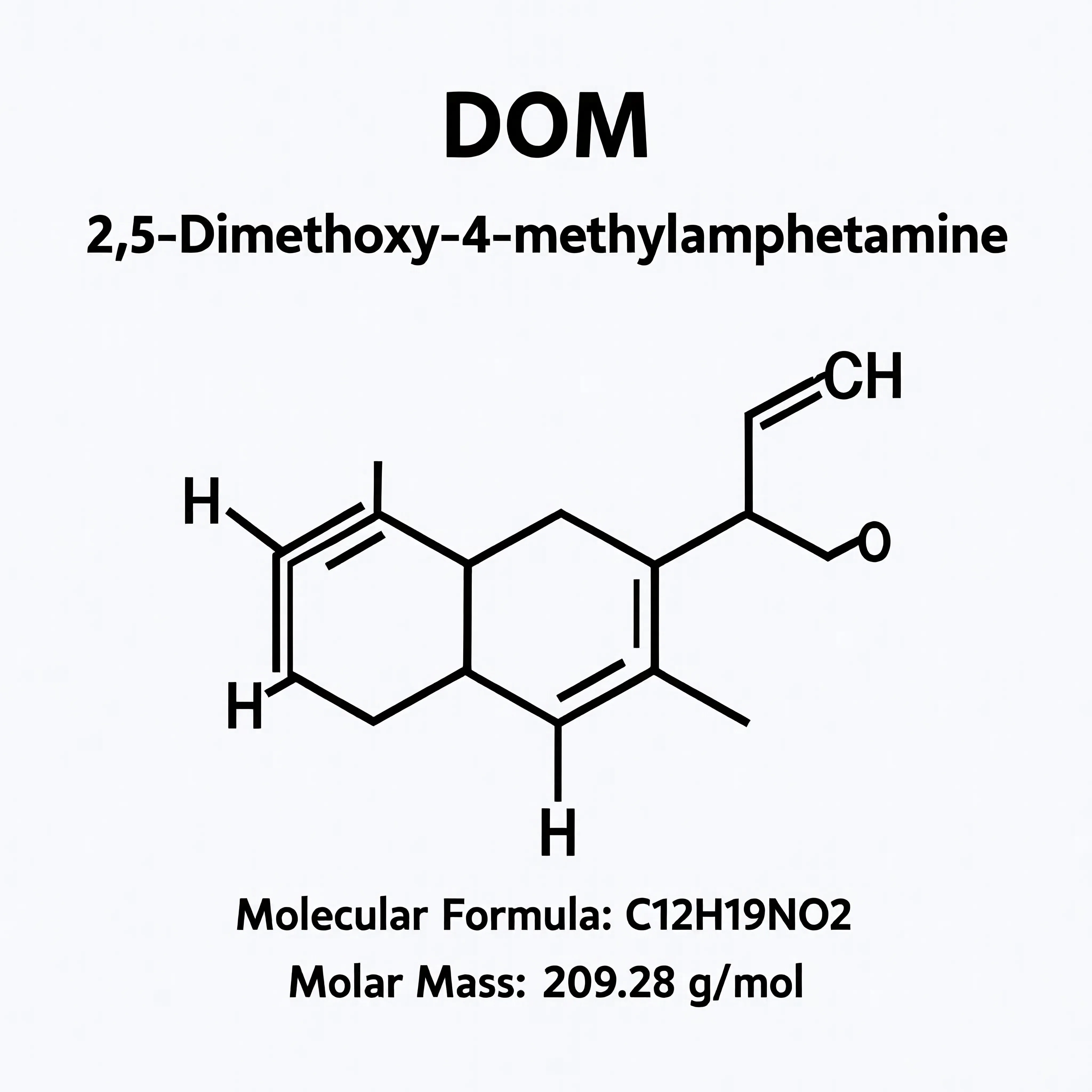


DOM (2,5-Dimethoxy-4-methylamphetamine)
Overview
DOM (also known as STP, “Serenity, Tranquility, and Peace”) is a synthetic psychedelic compound belonging to the substituted amphetamine / phenethylamine family. It is chemically related to mescaline and the 2,5-dimethoxy substituted phenethylamines explored extensively by Alexander Shulgin.
- IUPAC name: 1-(2,5-dimethoxy-4-methylphenyl)propan-2-amine
- Molecular formula: C₁₂H₁₉NO₂
- Molecular weight: ~209.29 g/mol
- CAS Number: 15588-95-1
- Class: Psychedelic phenethylamine; 5-HT₂A receptor agonist
History & Origin
DOM was first synthesized and characterized in the 1960s. It appeared briefly on the U.S. street market around 1967–1968 under the name “STP,” promoted as a longer-lasting alternative to LSD. Reports of unexpectedly long duration and uncomfortable reactions led to its rapid disappearance from the recreational market. The compound later became a reference point in Shulgin’s PiHKAL (1991), where its synthesis, dosage, and human effects are documented.
Pharmacology
DOM acts primarily as a potent agonist at the serotonin 5-HT₂A and 5-HT₂C receptors, which is the mechanism shared by classic psychedelics. It also shows activity at adrenergic receptors and is a monoamine releasing agent.
- Receptor binding: Strong partial agonist at 5-HT₂A; significant activity at 5-HT₂B and 5-HT₂C
- Onset: 1–2 hours (oral)
- Duration: 14–20 hours (notably long for its dose)
- Active oral dose range: ~3–10 mg
Documented Effects (Shulgin, PiHKAL)
At common doses, effects include:
- Visual alterations (closed-eye imagery, color enhancement, pattern distortions)
- Altered perception of time and space
- Euphoria and emotional openness
- Introspective, meditative state
- Mild to moderate stimulation
At higher doses, effects intensify significantly and may include:
- Strong confusion or anxiety
- Nausea and body load
- Sleep difficulty after the experience
Safety & Harm Considerations
- Long duration makes setting/dosing errors difficult to correct.
- Risk of psychological distress, especially at high doses or in unprepared users.
- Serotonergic activity (5-HT₂B agonism in particular) raises theoretical concerns for cardiac valvulopathy with repeated use.
- May interact dangerously with SSRIs, MAOIs, and other serotonergic medications.
- Tolerance develops rapidly and resets within roughly 3–4 days.
| Weight | 0.01 kg |
|---|---|
| Quantity | 10 grams, 20 grams, 40 grams, 60 grams |
Be the first to review “DOM (2,5-Dimethoxy-4-methylamphetamine)”
Related products

Phenethylamines

Phenethylamines
Phenethylamines
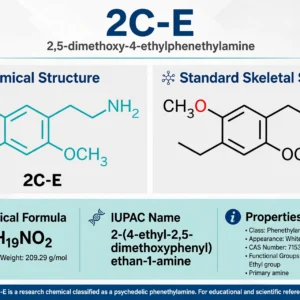
Phenethylamines
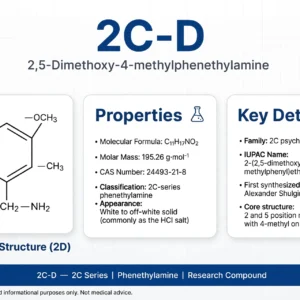
Phenethylamines

Phenethylamines

Phenethylamines
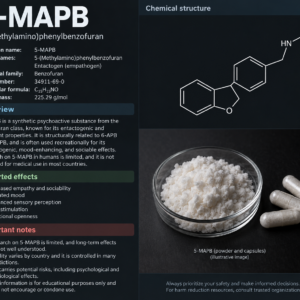
Phenethylamines
Reviews
There are no reviews yet.