


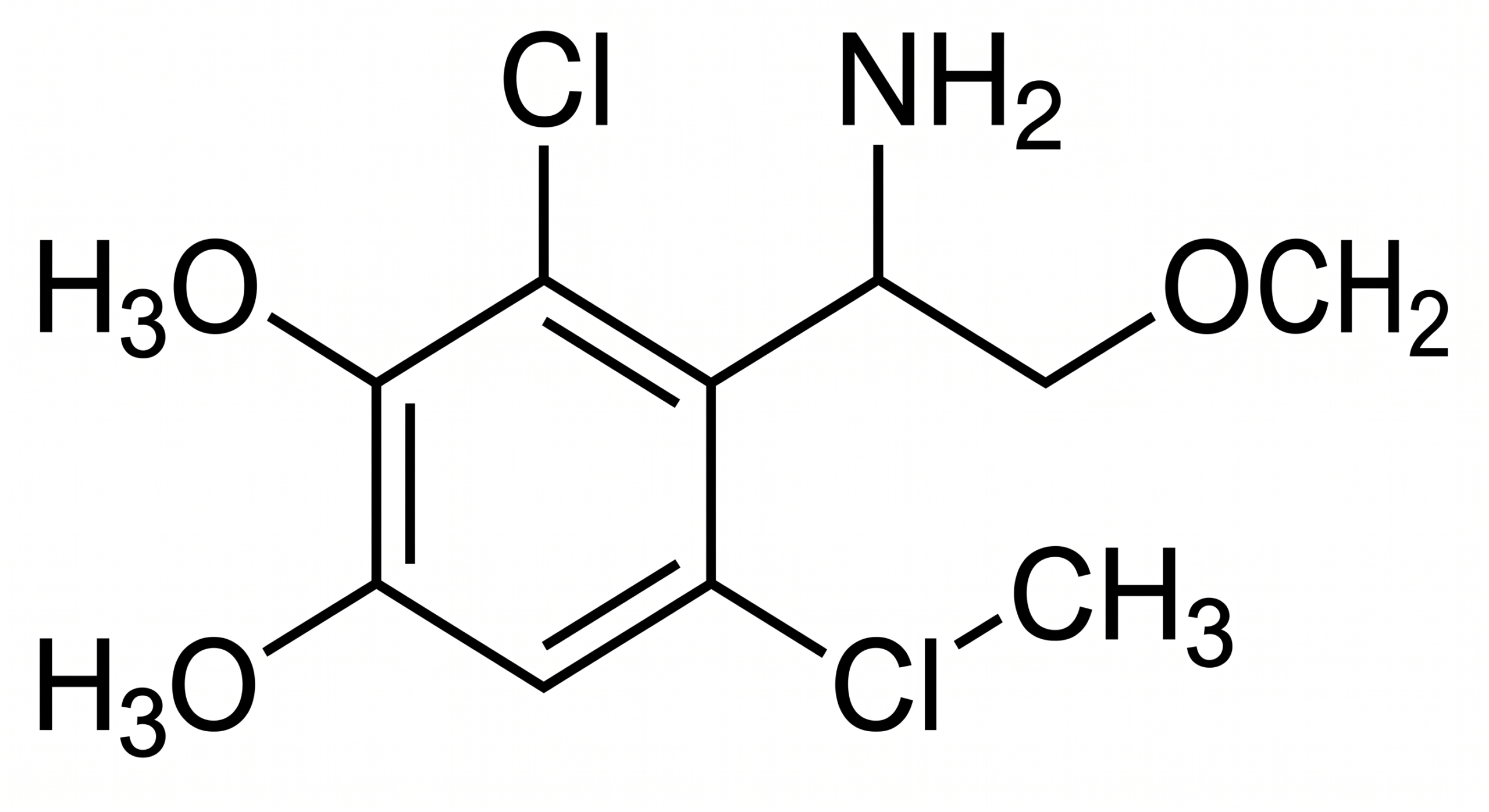

DOC (4-Chloro-2,5-dimethoxyamphetamine)
Overview
DOC is a synthetic psychedelic in the substituted amphetamine / phenethylamine family and a member of the DOx series (DOM, DOB, DOC, DOI, DON, etc.). It is the 4-chloro analogue of DOM and the de-benzylated cousin of 25C-NBOMe. DOC is characterized by high potency, very long duration, and a reputation for clear, “analytical” headspaces compared to LSD.
- IUPAC name: 1-(4-chloro-2,5-dimethoxyphenyl)propan-2-amine
- Molecular formula: C₁₁H₁₆ClNO₂
- Molecular weight: ~229.71 g/mol
- CAS Number: 123431-31-2 (hydrochloride: 18717-73-2)
- Class: Psychedelic phenethylamine (DOx series); potent 5-HT₂A agonist
History & Origin
DOC was synthesized and characterized alongside other DOx compounds during the systematic exploration of 2,5-dimethoxy amphetamines in the 1960s–70s. It is documented in Shulgin’s PiHKAL (entry #69), where it is described as producing a clean, long-lasting psychedelic experience with strong visual and cognitive components.
Pharmacology
DOC is a high-affinity agonist at serotonin 5-HT₂A and 5-HT₂C receptors, with the typical amphetamine-class activity at trace amine and monoamine systems. Its pharmacological profile closely parallels DOM and DOI, but the 4-chloro substitution produces distinct subjective effects and slightly different potency.
- Receptor binding: Potent agonist at 5-HT₂A and 5-HT₂C; some activity at 5-HT₂B and adrenergic receptors
- Active oral dose: ~1.5–3 mg (sometimes reported up to 5 mg)
- Onset: 1–2 hours (oral)
- Duration: 12–24 hours (one of the longest in the DOx series)
- Routes: Oral (most common); reported sublingual and insufflated use, though with greater discomfort
Documented Effects (Shulgin, PiHKAL)
At common doses, DOC produces:
- Strong visual hallucinations (geometric patterns, color saturation, motion in static objects)
- Time dilation and altered sense of duration
- A clear, “analytical” or “cerebral” quality, often described as more lucid than LSD
- Physical stimulation and increased heart rate
- Introspection and emotional amplification
At higher doses:
- Confusion, paranoia, and looping thoughts
- Marked body load (jaw tension, nausea, vasoconstriction)
- Difficulty sleeping, sometimes lasting well beyond the primary experience
- In rare cases, seizures or psychotic reactions in predisposed individuals
Safety & Harm Considerations
- Long duration — an episode can last a full day or more, making set/setting/dose errors hard to correct.
- Vasoconstriction — peripheral vasoconstriction with potential for tissue discomfort at higher doses.
- Cardiac considerations — significant 5-HT₂B agonism raises theoretical concerns for valvulopathy with chronic or repeated use.
- Psychological risks — prolonged experiences can trigger anxiety, panic, or persisting psychological distress, especially in unprepared users.
- Drug interactions — dangerous with MAOIs, SSRIs, SNRIs, tramadol, and other serotonergic substances (serotonin syndrome risk).
- Tolerance — develops rapidly; full cross-tolerance with other 5-HT₂A agonists (DOM, DOI, LSD) resets within ~5–7 days.
- Misrepresentation — like other potent DOx and NBOMe compounds, DOC has occasionally been found on blotter paper sold as LSD, producing unexpectedly intense experiences
| Weight | 0.01 kg |
|---|---|
| Quantity | 10 mg, 100 mg |
Be the first to review “DOC (4-Chloro-2,5-dimethoxyamphetamine)”
Related products

Phenethylamines
Phenethylamines

Phenethylamines
Phenethylamines
Phenethylamines
Phenethylamines

Phenethylamines
Phenethylamines
Reviews
There are no reviews yet.