

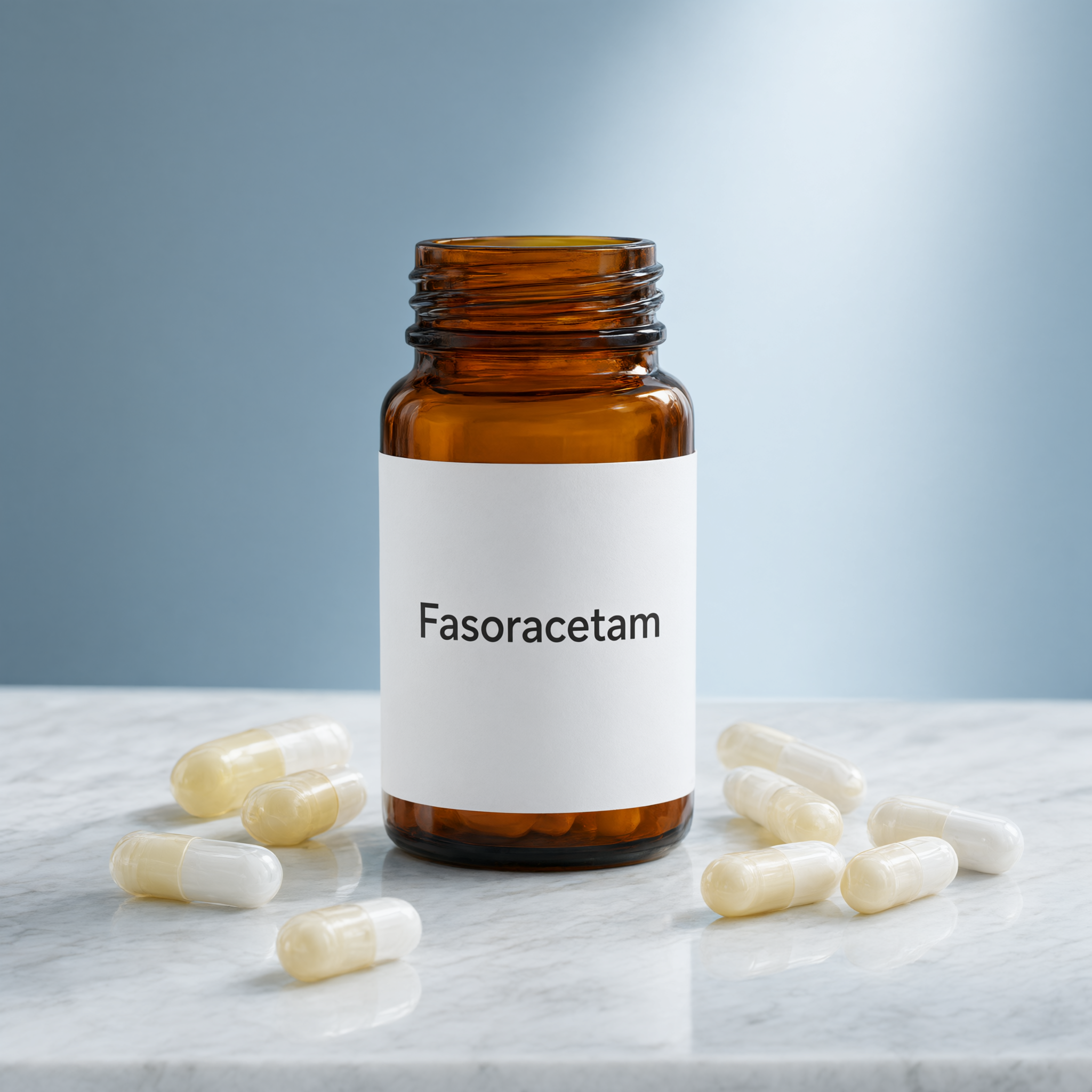

Product Name: Fasoracetam Synonyms: NS-105; NFC-1; LAM-105; (5R)-5-(piperidine-1-carbonyl)pyrrolidin-2-one
General Description: Fasoracetam is formally described as (5R)-5-(piperidine-1-carbonyl)pyrrolidin-2-one. It is a synthetic, centrally acting small molecule belonging to the racetam family of nootropic (cognitive-enhancing) compounds. Originally synthesized in the 1990s by the Japanese pharmaceutical company Nippon Shinyaku (under the developmental code NS-105) for the treatment of vascular dementia, it was later acquired and investigated clinically in the United States as a potential targeted therapy for Attention Deficit Hyperactivity Disorder (ADHD) in adolescents possessing specific genetic mutations in the metabotropic glutamate receptor (mGluR) network.
In analytical, clinical, and academic toxicology, fasoracetam is utilized as a fundamental reference standard. It is essential for the calibration of analytical instrumentation (such as LC-MS/MS, GC-MS, and HPLC) and the development of screening methodologies to identify and quantify the substance in grey-market dietary supplements, experimental nootropic blends, or biological matrices.
Technical Information:
- CAS Number: 110958-19-5
- Molecular Formula: C<sub>10</sub>H<sub>16</sub>N<sub>2</sub>O<sub>2</sub>
- Formula Weight: 196.25 g/mol
- SMILES: O=C1CCC@@HN1
- InChI Key: HTIQDVPJNHHMMR-ZETCQYMHSA-N
- Formulation: Typically supplied as a neat white-to-off-white crystalline solid or as a certified reference material solution (e.g., 1 mg/mL in methanol or water).
Biological Action: Fasoracetam possesses a distinct and multifaceted pharmacological profile that differentiates it from classical racetams like piracetam. It acts primarily as an agonist at metabotropic glutamate receptors (mGluRs), specifically targeting groups II and III. Furthermore, preclinical studies indicate that repeated administration of fasoracetam uniquely leads to the upregulation of GABA<sub>B</sub> receptors (which are targeted by depressants like phenibut and baclofen), providing a potential mechanism for its observed anxiolytic and mood-stabilizing properties. Like other advanced racetams, fasoracetam also enhances high-affinity choline uptake (HACU) in the cerebral cortex and hippocampus, facilitating the synthesis and release of acetylcholine to support memory and learning processes.
Regulatory and Safety Information:
- Intended Use: This product is intended strictly for use as an analytical reference standard for forensic, toxicological, and academic research purposes.
- Warning: This product is an unapproved investigational compound. It is not for human or veterinary use outside of approved clinical applications.
- Legal Status: The regulatory status of fasoracetam varies globally. In the United States, fasoracetam is an unscheduled substance and is not controlled under the Controlled Substances Act (CSA). However, the Food and Drug Administration (FDA) does not recognize fasoracetam as a legitimate dietary ingredient, classifying it instead as an unapproved new drug. The FDA has actively issued warning letters to vendors attempting to market fasoracetam for human consumption or within dietary supplements. Procurement of the bulk material for analytical research requires no special DEA licenses, but handling must occur strictly within professional laboratory environments using appropriate Personal Protective Equipment (PPE) such as safety glasses, chemical-resistant gloves, and a laboratory coat.
| Weight | 0.01 kg |
|---|
Be the first to review “Fasoracetam”
Related products
Nootropics
Nootropics
Nootropics


Nootropics
Nootropics

Nootropics

Nootropics


Nootropics
Reviews
There are no reviews yet.