

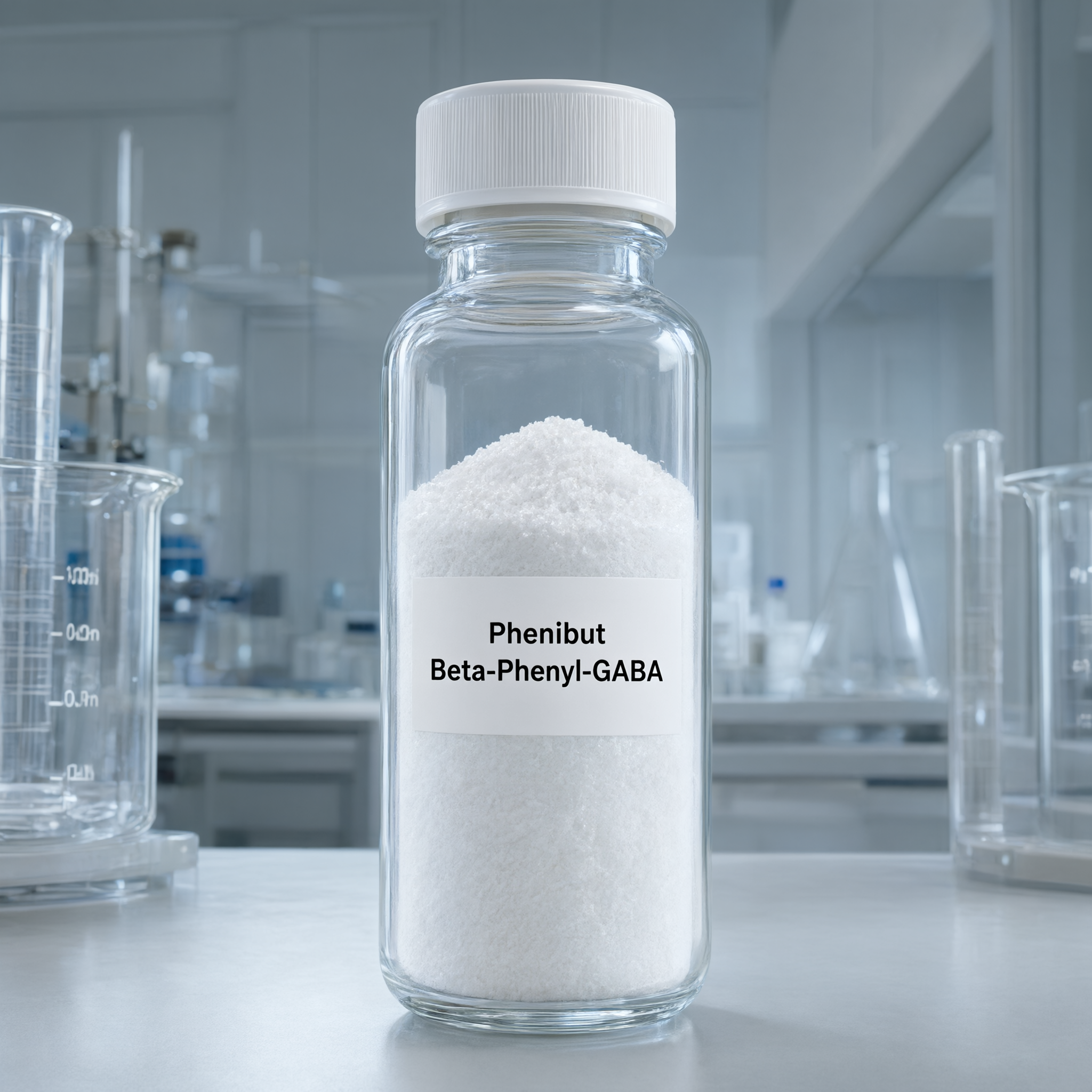
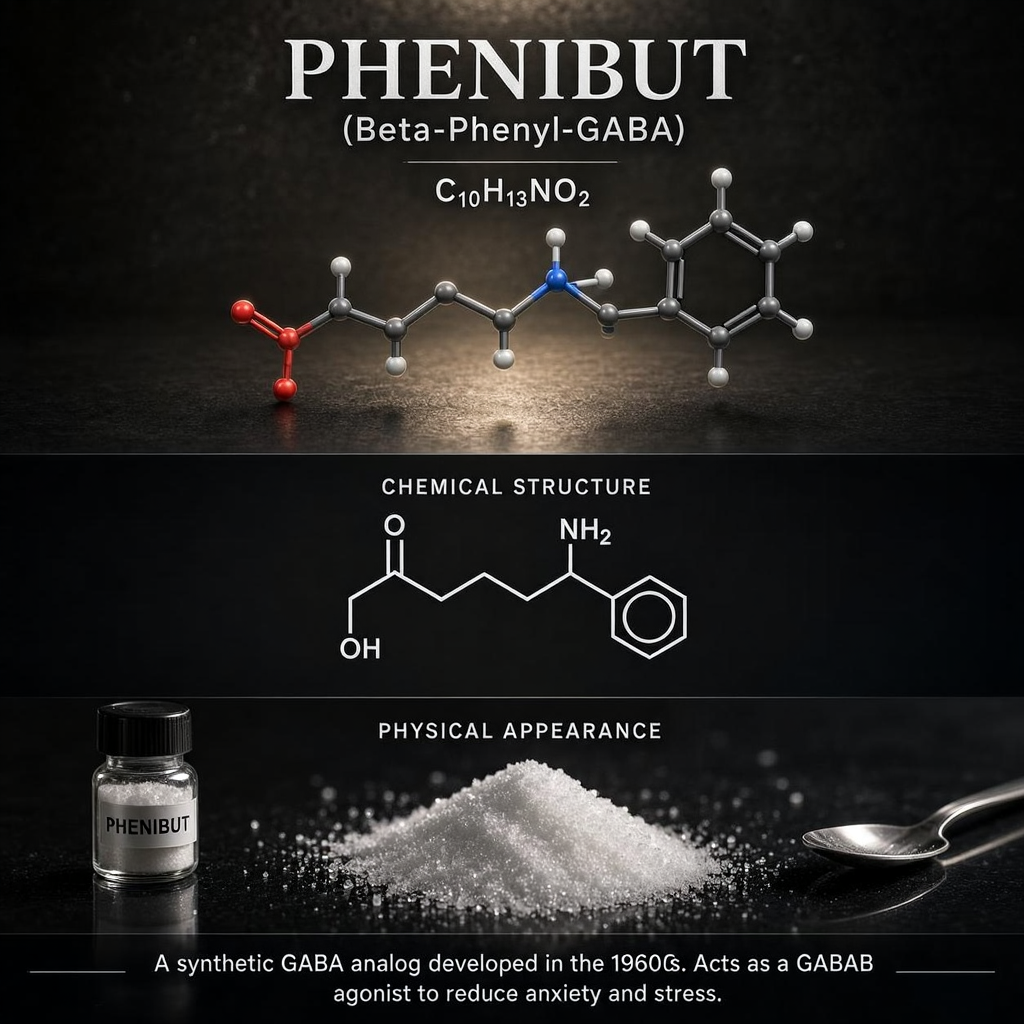



Phenibut (Beta-Phenyl-GABA)
Product Name: Phenibut (Beta-Phenyl-GABA) Synonyms: 4-Amino-3-phenylbutanoic acid; β-phenyl-γ-aminobutyric acid; Fenibut; Phenybut; Noofen; Anvifen
General Description: Phenibut is formally described as 4-amino-3-phenylbutanoic acid. It is a synthetic, centrally acting molecule that functions primarily as an atypical anxiolytic and gabapentinoid. Originally synthesized in the Soviet Union in the 1960s, it is utilized as a prescription pharmaceutical in Russia and several Eastern European nations for the treatment of anxiety, insomnia, post-traumatic stress disorder, and various neurological conditions. In Western markets, it emerged prominently in the 2010s as an unregulated recreational drug, dietary supplement, and experimental nootropic, though it has increasingly drawn significant toxicological and regulatory scrutiny due to its substantial potential for abuse, physiological dependence, and severe withdrawal syndromes.
In analytical, clinical, and forensic toxicology, phenibut is utilized as a fundamental reference standard. It is essential for the calibration of analytical instrumentation (such as LC-MS/MS, GC-MS, and HPLC) and the development of screening methodologies to identify and quantify the substance in grey-market dietary supplements, seized materials, or biological matrices (e.g., whole blood, plasma, urine).
Phenibut (Beta-Phenyl-GABA) Technical Information:
- CAS Number: 1078-21-3 (Free acid) / 3060-41-1 (Hydrochloride salt)
- Molecular Formula: C<sub>10</sub>H<sub>13</sub>NO<sub>2</sub>
- Formula Weight: 179.22 g/mol (Free acid) / 215.68 g/mol (Hydrochloride salt)
- SMILES: C1=CC=C(C=C1)C(CC(=O)O)CN
- InChI Key: WRBJHXVTKIMNNM-UHFFFAOYSA-N (Free acid)
- Formulation: Typically supplied as a neat white crystalline powder (frequently formulated as a highly water-soluble hydrochloride salt, or less commonly as a free amino acid) or as a certified reference material solution (e.g., 1 mg/mL in methanol).
Biological Action: Phenibut possesses a complex, dual mechanism of action. Structurally, it is a derivative of the inhibitory neurotransmitter gamma-aminobutyric acid (GABA) with an added phenyl ring, which allows the molecule to readily cross the blood-brain barrier. It acts primarily as an agonist at the metabotropic GABA<sub>B</sub> receptor (similarly to the prescription muscle relaxant baclofen, which is the 4-chloro derivative of phenibut).
Additionally, pharmacological profiling reveals that phenibut acts as a potent blocker of α<sub>2</sub>δ (alpha-2-delta) subunit-containing voltage-gated calcium channels, effectively placing it in the gabapentinoid class alongside gabapentin and pregabalin. This dual mechanism heavily mediates its pronounced anxiolytic, sedative, and muscle-relaxant properties. At supratherapeutic doses, it may lose binding selectivity and exhibit weak agonism at the GABA<sub>A</sub> receptor. Chronic administration is strongly associated with rapid tolerance and a severe, potentially life-threatening withdrawal syndrome upon abrupt cessation, characterized by rebound anxiety, insomnia, tremors, autonomic instability, and delirium.
Regulatory and Safety Information:
- Intended Use: This product is intended strictly for use as an analytical reference standard for forensic, toxicological, and academic research purposes.
- Warning: This product carries a severe risk of central nervous system depression, profound physiological dependence, and severe withdrawal. It is not an approved dietary supplement and is not for human or veterinary use outside of strictly approved clinical applications.
| Weight | 0.01 kg |
|---|
Be the first to review “Phenibut (Beta-Phenyl-GABA)”
Related products

Nootropics
Nootropics

Nootropics


Nootropics
Nootropics

Nootropics

Nootropics
Nootropics
Reviews
There are no reviews yet.