

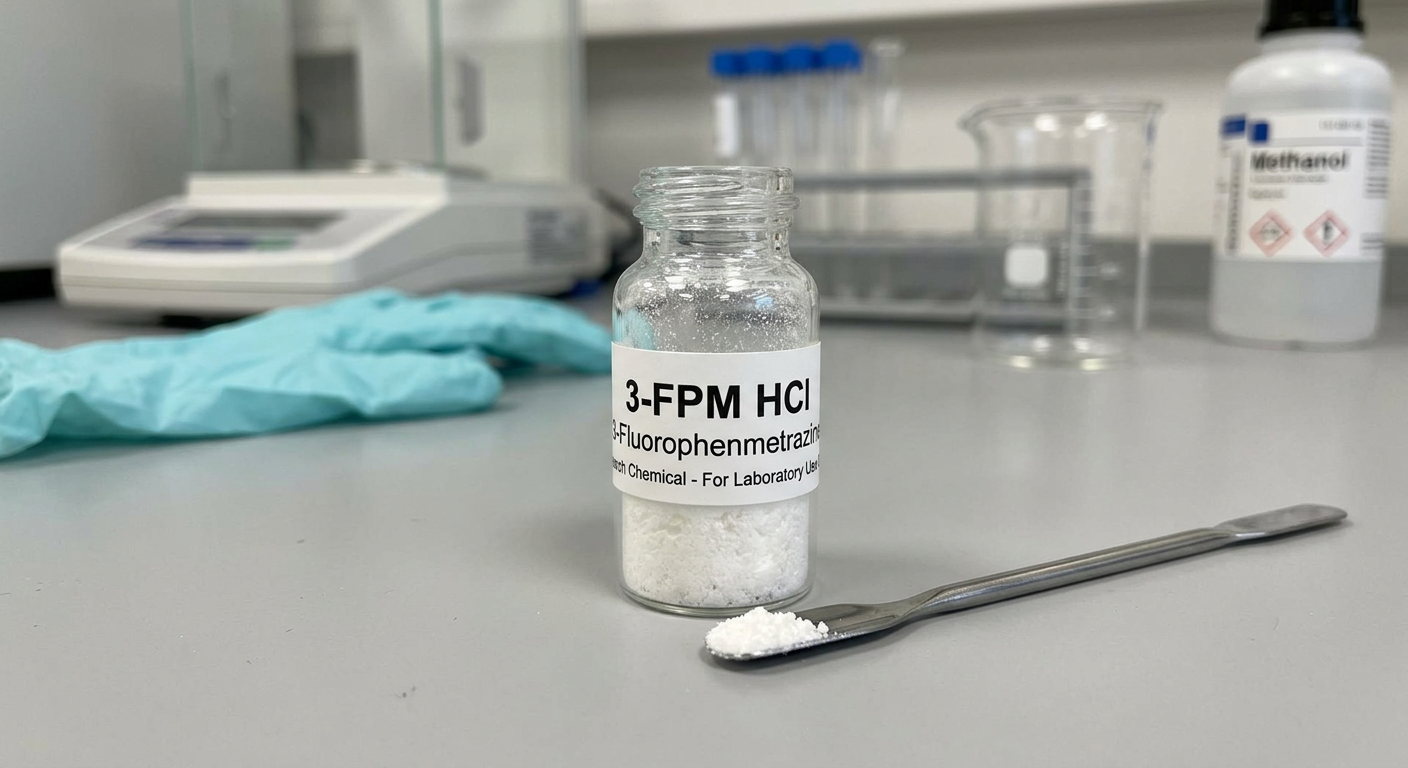
3-FPM is a fluorinated derivative of phenmetrazine, used in research to study monoamine reuptake inhibition and stimulant activity.
Purity: ≥98% (HPLC)
Appearance: White crystalline powder
CAS: 1350768-28-3
Molecular Formula: C10H12FNO
Molecular Weight: 181.21 g/mol
For research purposes only.
Product Name: 3-FPM (3-Fluorophenmetrazine) Synonyms: PAL-593; 2-(3-fluorophenyl)-3-methylmorpholine; 3-Fluoro Phenmetrazine
General Description: 3-FPM is formally described as 2-(3-fluorophenyl)-3-methylmorpholine. It is a synthetic, psychoactive molecule belonging to the substituted morpholine class. Structurally, it is the 3-fluoro (or meta-fluoro) analogue of phenmetrazine, a classic central nervous system stimulant that was heavily prescribed in the mid-20th century under the trade name Preludin before being internationally restricted. 3-FPM emerged prominently on the illicit designer drug market around 2014 as a novel psychoactive substance (NPS) sought for its stimulant properties, which users frequently described as being more “functional” and less jittery than substituted amphetamines.
In analytical, clinical, and forensic toxicology, 3-FPM is utilized as a fundamental reference standard. It is essential for the calibration of analytical instrumentation (such as LC-MS/MS, GC-MS, and NMR) and the development of screening methodologies to identify and quantify the substance in seized materials, adulterated illicit street drugs, or biological matrices (e.g., whole blood, plasma, urine).
Technical Information (Hydrochloride Salt):
- CAS Number: 134760-34-2 (Hydrochloride)
- Molecular Formula: C<sub>11</sub>H<sub>14</sub>FNO • HCl
- Formula Weight: 231.7 g/mol (Hydrochloride) / 195.23 g/mol (Freebase)
- SMILES: CC1C(NCCO1)C2=CC(=CC=C2)F.Cl
- InChI Key: WSSNWLMKMYWNNR-UHFFFAOYSA-N (Freebase)
- Formulation: Typically supplied as a neat white-to-off-white crystalline solid or as a certified reference material solution (e.g., 1 mg/mL or 100 µg/mL in methanol).
Biological Action: Like its parent compound phenmetrazine, 3-FPM acts primarily as a monoamine releaser and reuptake inhibitor. It strongly targets the dopamine transporter (DAT) and the norepinephrine transporter (NET), inducing the release and preventing the clearance of these catecholamines in the synaptic cleft. It exhibits comparatively weak affinity for the serotonin transporter (SERT). This pharmacological profile mediates its classical psychomotor stimulant effects, which include pronounced wakefulness, increased focus, euphoria, and appetite suppression. Acute intoxication at high doses presents with typical stimulant toxidromes, including tachycardia, hypertension, hyperthermia, severe anxiety, and potential stimulant-induced psychosis.
Regulatory and Safety Information:
- Intended Use: This product is intended strictly for use as an analytical reference standard for forensic, toxicological, and academic research purposes.
- Warning: This product is a potent psychostimulant and carries a significant risk of central nervous system overstimulation, cardiovascular stress, severe anxiety, and physiological dependence. It is not for human or veterinary use.
| Weight | 0.01 kg |
|---|
Be the first to review “3-FPM (3-Fluorophenmetrazine)”
Related products
Stimulants

Stimulants
Stimulants
Stimulants

Stimulants
Stimulants

Stimulants
Stimulants
Reviews
There are no reviews yet.